
Views: 0 Author: Site Editor Publish Time: 2026-11-03 Origin: Site


A pin brush is a common dog grooming tool primarily used to gently detangle hair, remove loose hair, and keep a dog's coat smooth and well-groomed. Unlike slicker brushes, which have numerous fine wire bristles designed to tackle tangles and remove loose undercoat, a pin brush features longer, widely spaced pins with rounded tips. Its gentler brushing action makes it particularly useful for maintaining long, silky, and curly coats.
A pin brush is very similar to a human hairbrush. It typically features an oval-shaped head with a cushioned base from which metal pins extend. The tips of the pins are usually rounded and smoothly polished, with some designs featuring protective plastic or rubber tips. This rounded-tip design helps prevent scratching or irritating the dog's skin during brushing.

Pins
Cushion Pad and Base
Handle
A pin brush is primarily used for routine coat maintenance and finishing, rather than removing heavy mats or deeply embedded tangles. It works particularly well on longer, silky coats that need regular brushing to stay neat and well-arranged.
During grooming, a pin brush can help smooth the outer coat, separate individual strands, remove surface debris, and restore a natural, fluffy appearance. It is also useful for light detangling when the coat has only minor knots and is otherwise in good condition.
The American Kennel Club describes pinhead brushes as finishing tools for long-coated dogs, while PetSmart also recommends pin brushes for longer, silkier coats. These uses highlight the brush's role in maintaining and finishing the coat rather than tackling severe tangles or compacted undercoat.
However, a pin brush may not reach tangles close to the skin, particularly in dense or curly coats. For coats with significant knots or matting, an appropriate detangling tool or grooming technique may be needed first.
Although these grooming tools may look similar or serve overlapping purposes, each is designed for a different coat-care task. Understanding their differences helps you choose the right tool for your dog's coat.
Pin Brush: Features longer, widely spaced pins with rounded tips. It is primarily used for gentle coat maintenance, smoothing, and finishing, particularly on long and silky coats.
Slicker Brush: Uses numerous short, fine wire pins packed closely together. It is designed to remove loose hair, work through tangles, and help remove mats. Unlike a pin brush, it provides more concentrated brushing action, so gentle pressure is important to avoid irritating the skin.
Undercoat Rake: Features longer teeth designed to reach through the topcoat and remove loose, shedding undercoat. It is particularly useful for suitable double-coated and heavy-coated breeds, where a regular pin brush may not reach the dense undercoat effectively.
Metal Comb: Consists of straight metal teeth, usually arranged with different spacing. It is useful for checking the coat for hidden tangles, separating hair, and finishing detailed areas after brushing. Unlike a pin brush, it does not have a cushioned brushing surface.
Start with a small section rather than sweeping over the whole coat. Part or lift the hair so you can work beneath the surface layer, then brush in short, controlled strokes. On a longer coat, work methodically through one section at a time. Chewy describes lifting sections and brushing underneath them, then using a metal comb to check for missed tangles.
Keep your grip light. If a pin catches, do not yank it through. Pause, support the hair near the skin, and see whether the knot can be eased without pulling. Stop if the dog flinches, turns away repeatedly, or otherwise seems uncomfortable. After brushing, pass a suitable comb gently through the coat to check for snags; a snag is a cue to reassess, not to apply more force.
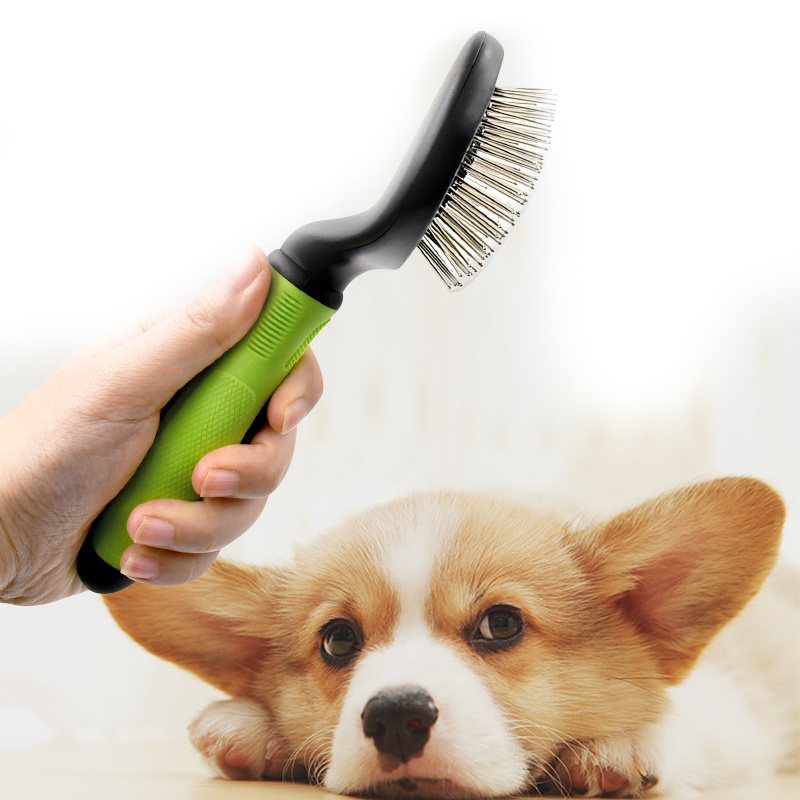
A pin brush may be worth considering when a dog has a longer or silkier coat that benefits from smoothing or finishing. Some dogs with flowing coats may also tolerate a suitable pin brush well as part of routine care. These are starting points, not breed prescriptions: dogs of the same breed can have different coat lengths, textures, grooming histories, and sensitivities.
Before choosing one, consider the coat’s length and density, whether it mats easily, the pin length and tip design, and how the dog responds. A product’s breed examples or claims are not a guarantee that it is right for your dog. If you are unsure, ask your groomer to demonstrate an appropriate brush and technique for that coat.
A pin brush is not a stand-alone solution for severe, compacted, or skin-close mats. Do not force a brush through a tight knot or cut a mat close to the skin at home. Chewy advises seeking a professional groomer when mats are next to the skin, where removal can risk injury.
The same caution applies if brushing causes pain, redness, or distress. Stop and ask a professional groomer or veterinarian for advice when there is a skin concern or the dog’s reaction is unusual. A gentle brush is still the wrong tool if the coat condition or technique makes the session uncomfortable.
Is a pin brush good for every dog?
No. It may suit some longer or silkier coats for maintenance and finishing, but tool choice depends on coat condition, brush design, technique, and the dog’s comfort.
Can a pin brush remove mats?
It may help with a small, loose tangle in a coat that is otherwise maintained. It should not be forced through a tight or severe mat, especially one close to the skin. Ask a professional groomer for help with those mats.
Should I use a pin brush or a slicker brush?
Choose by task and coat, not by a universal ranking. A pin brush is often used for smoothing or finishing some longer coats; a slicker’s denser wires may suit other brushing needs. A groomer can show which tool and pressure are appropriate for your dog.
How can I tell whether I brushed thoroughly?
Work in sections and gently check the coat with a suitable metal comb. If it catches, reassess that area rather than pulling harder.


