
Views: 0 Author: Site Editor Publish Time: 2026-10-30 Origin: Site


For many dog and cat owners, keeping pet hair under control at home is an ongoing challenge. There are plenty of grooming tools on the market, but when it comes to a brush that can be used for both dry grooming and bath time, the pet rubber brush is one worth knowing about.
Many people associate rubber brushes with bath time, but they're more versatile than you might think. Over the years, they've evolved into different types of grooming tools, including dry-use brushes and grooming gloves, each designed for different needs.
If you're new to rubber brushes, this guide will walk you through what they are, what they're used for, which pets they're best for, and how they developed over the years.
A pet rubber brush, also known as a pet bath brush, curry brush, or rubber grooming mitt, is a grooming tool made from natural rubber or soft materials such as thermoplastic elastomer (TPE).
Unlike traditional metal pin brushes, rubber brushes usually have rows of soft, flexible nubs or teeth on the surface. They're not designed to dig deep into the coat or work out tough mats. Instead, they use friction, static electricity, and gentle massage to help remove loose hair, clean the coat, and support everyday skin and coat care.
Rubber brushes come in several styles, each designed for different grooming needs:
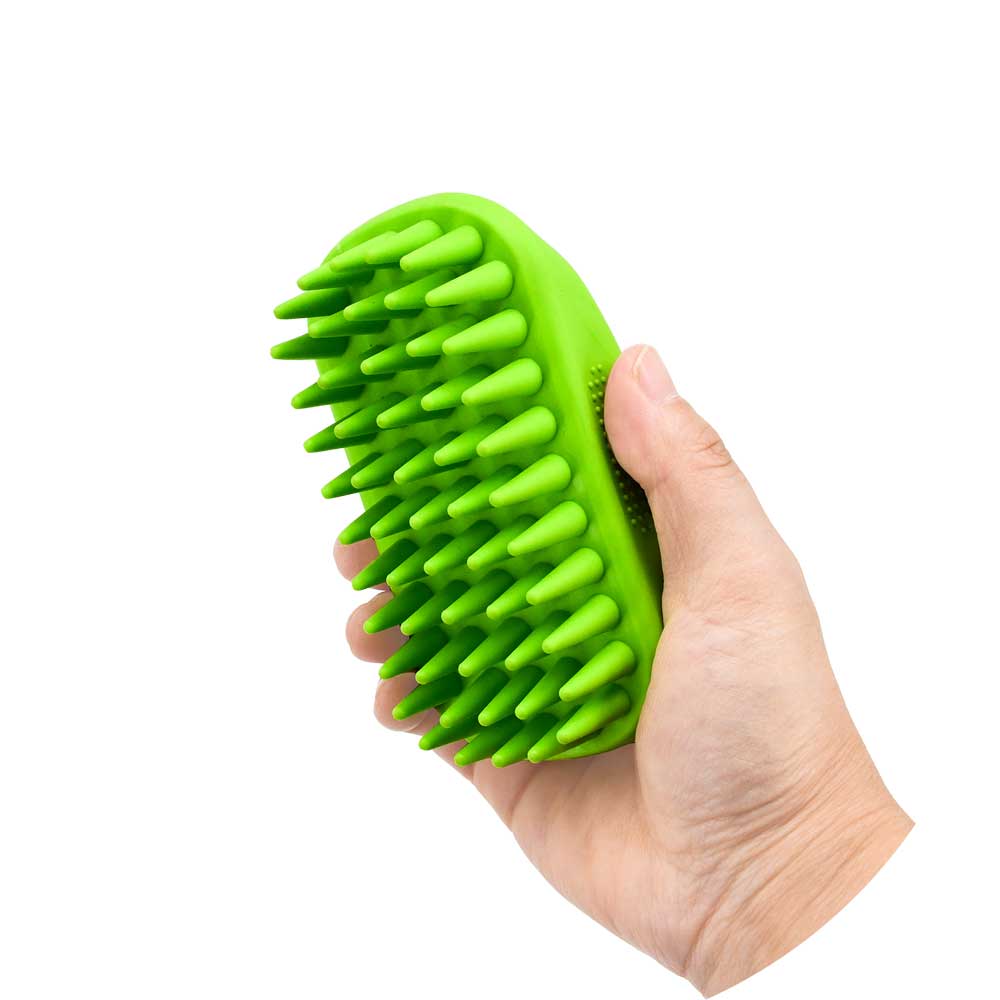
These brushes are held directly in the hand and are mainly used during bath time to work shampoo into the coat, remove loose hair, and massage the skin.
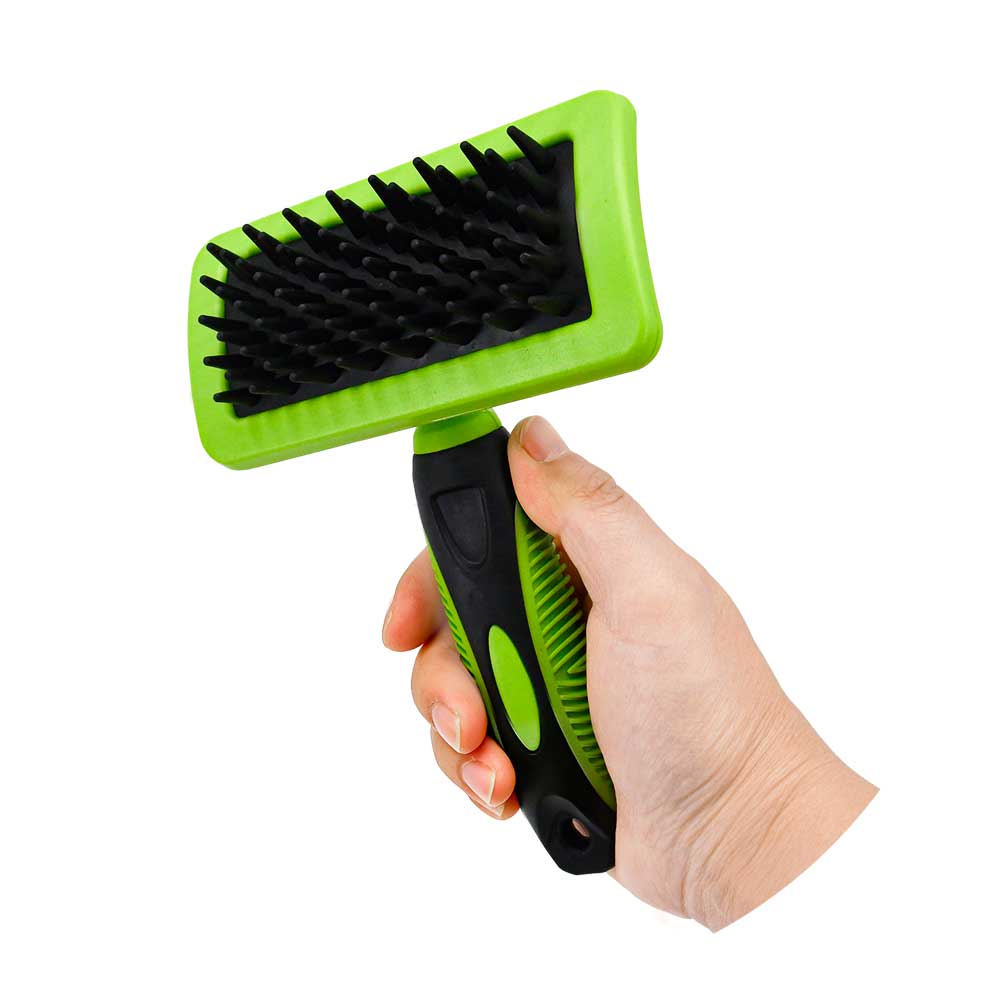
These have a built-in handle for a secure grip, making them easy to use for dry grooming and removing loose hair.
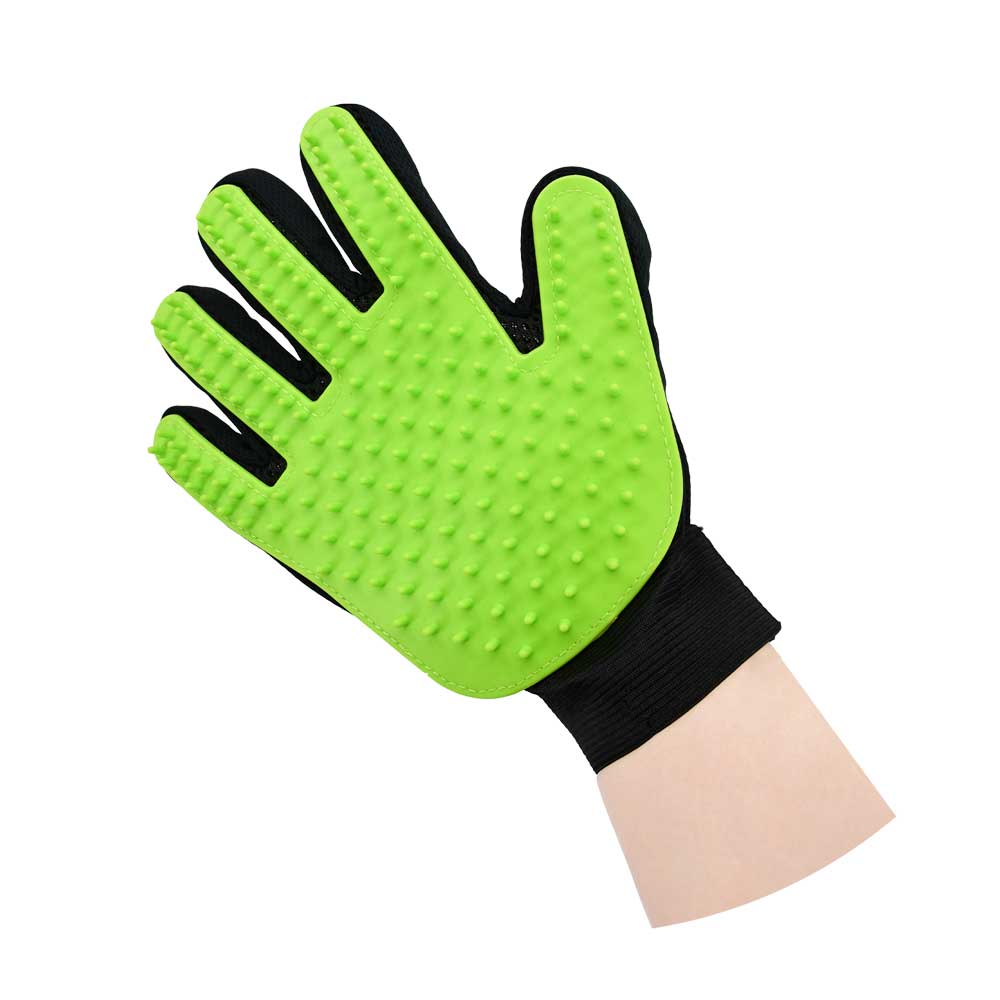
These fit over your hand, allowing you to follow your pet's body shape with natural hand movements. Many pets find this more like being petted than being brushed.

Some designs can be connected to a water hose, while others have a built-in compartment for shampoo, making bath time easier and more convenient.
Rubber brushes may look simple, but they can be useful for several parts of your pet's grooming routine. Here are some of their main uses.
Shedding season can be a nightmare for pet owners. As a rubber brush moves over your pet's coat, the friction between the rubber teeth and the hair helps loosen and gather dead hair that's ready to shed. Some brushes may also create a mild static effect that helps loose hair cling to the brush.
Compared with some regular combs, a rubber brush can make it easier to collect loose hair before it ends up all over your couch, rugs, and clothes.
Many rubber brushes can be used on a dry coat, but they're also great for bath time when the product is designed for wet use.
When bathing a dog or a short-haired cat, you can apply pet shampoo and gently move the brush in small circles. This helps spread the shampoo through the coat, work up a lather, and loosen some dirt, flakes, and loose hair.
A rubber brush can make bath time easier, but it doesn't replace proper rinsing or guarantee that shampoo reaches every part of the coat.
For many pets, the soft feel of a rubber brush can make grooming feel more like a relaxing massage. Gentle brushing provides pleasant contact with the skin and may help some pets feel more comfortable during grooming.
Regular grooming also helps spread natural oils across the coat, which can help keep it looking smooth and healthy. The key is to use the right brush and gentle pressure. Avoid rubbing too hard or repeatedly brushing the same spot.
For puppies, senior dogs, short-haired cats, and pets that dislike hard metal pin brushes, a soft rubber brush may be a more comfortable option.
Rubber brushes generally don't have sharp metal pins, so they can reduce the risk of discomfort from hard brush tips when used properly. However, soft rubber doesn't mean you can brush as hard as you like. Too much pressure or repeated rubbing can still irritate the skin.
Start gently and watch your pet's reaction. With a little patience, grooming may become a more enjoyable part of your pet's routine.
Rubber brushes can be useful, but they're not a one-size-fits-all grooming tool. Choosing the right brush for your pet's coat will help you get better results.
Short-haired dogs and cats: Examples include Labrador Retrievers, French Bulldogs, Beagles, British Shorthair cats, and American Shorthair cats. Rubber brushes are especially useful for gathering loose hair from short, straight coats.
Dogs with short or medium-length double coats: Examples include Corgis and Shiba Inus. During shedding season, some rubber brushes can help loosen and remove shed hair. However, how well they reach the undercoat depends on the length and design of the brush teeth.
Pets that dislike traditional brushes: For pets that are nervous about metal pins or stiff bristles, a soft rubber brush may be a good alternative, as long as they find the feel comfortable.
Long coats that tangle easily: Breeds such as Afghan Hounds, Maltese, and Shih Tzus often need tools that can reach through longer hair and gently work through tangles. A comb or slicker brush is usually a better choice for this job.
Thick undercoats that need deeper grooming: Some double-coated breeds need a dedicated undercoat rake or another tool designed to reach loose hair beneath the topcoat. A standard rubber brush may only remove hair from the surface.
Pets with severe mats: If your pet has tight clumps of tangled hair, repeatedly brushing over them with a rubber brush can pull on the skin and cause discomfort. Use an appropriate dematting tool, or ask a professional groomer for help. Avoid cutting mats out with scissors close to the skin, as it's easy to cause an injury.
Keep in mind that every pet's coat is different, even within the same breed. The best choice depends on your pet's coat condition and the design of the brush.
Rubber brushes weren't invented just recently for modern pet grooming. Their history is connected to older grooming tools used to care for horses.
For centuries, people who cared for horses used a tool called a curry comb to loosen dirt, sweat, and shed hair from the coat. Early curry combs came in different materials, including metal and hard materials such as plastic. Over time, rubber designs offered another way to clean and massage an animal's coat using flexible teeth and friction.
The same basic idea—using a flexible material to help loosen dirt and hair—could also be applied to other animals, including dogs.
U.S. Patent No. 2,075,964, granted in 1937, describes a rubber grooming device for dogs and other animals. Its design includes a flexible rubber brush body with toothed edges. It also describes a metal spray head that could be connected to a hose, allowing the tool to be used for grooming and washing an animal's coat.
This patent shows that rubber grooming tools for dogs were already being explored in the 1930s. However, a patent record alone doesn't prove that a product was widely sold at the time.
Another useful piece of evidence comes from an article in the June 1973 issue of American Home. Veterinarian James R. Kinney noted that rubbing a dog's coat with a dry rubber sponge could also help remove loose hair.
This is evidence that rubber tools were being used for at-home dog grooming by that time. However, the tool described was a rubber sponge, not the toothed rubber brush commonly seen today.
An earlier edition of The Dog Owner's Guide from 1938 mentions using a sponge dipped in boric acid solution to clean a dog's eyes and nose, but it does not document using a dry rubber sponge to remove loose hair.
The KONG Company's ZOOM GROOM trademark record shows that the company filed for the mark in 1990 based on its intent to use it. The record states that the brush was being used for animal massage and grooming by 1991, and the trademark was registered in 1992.
U.S. Patent No. 5,524,575, filed in 1993 and granted in 1996, covers rubber grooming designs that include mitt-style tools for dogs and cats. These records show that rubber grooming products continued to develop in both design and form during this period.
By 2003, the U.S. Department of Agriculture's National Detector Dog Manual listed rubber curry brushes and rubber slicker brushes as separate grooming tools and described their uses in dog care.
This shows that different types of rubber brushes had become recognized tools in professional dog grooming.
Taken together, these records trace the development of rubber grooming tools from traditional animal care to dog grooming patents, home grooming products, and professional grooming equipment.
Brush with the coat and against it when appropriate: For everyday grooming, gently brush in the direction of hair growth. During shedding season, some short-haired pets may benefit from gentle circular or against-the-grain strokes to loosen shed hair. Finish by brushing in the direction of hair growth. Always follow the product instructions and avoid pulling on tangles.
Use gentle pressure: Rubber is soft, but brushing too hard can still irritate your pet's skin, especially in puppies and kittens. Start lightly and adjust based on your pet's reaction.
Clean the brush after use: Gather and remove the loose hair trapped between the brush teeth. Wash the brush regularly with warm water and a pet-safe cleaning product that's suitable for the brush material, then let it dry thoroughly before storing it.


